
How Floods Might Affect Businesses

Flood may occur anywhere, making the hazard as one of the most common natural disasters with the potential to cause significant damages to buildings, contents, and outdoor storage. In addition, the time required for cleanup and recovery can result in a substantial interruption to business operations even after the flood waters have receded. Although some properties may not be susceptible to flooding, the surrounding infrastructure (i.e., access roads, railroads, etc.) may be exposed and affected. This may lead to problems with ingress and egress, possibly resulting in a business interruption.
Assess your property and surrounding area for flood exposure, including consideration of the following:

i.     Nearby bodies of water, such as rivers, monsoon drains, elevated reservoirs or dams, retention ponds etc.

ii.    Historical flood events

iii.   Areas where water runoff can accumulate

iv.   Basement area with important equipment, utilities, or stock.

v.    Sewer or drain lines where water backflow is possible.

vi.   Access roads that are susceptible to flooding, that could create ingress/egress problem 

  1. Develop a comprehensive written flood emergency plan to mitigate the exposures. The plan should include;
    a)      Assigning designated roles and responsibilities for each team member
    b)     Provide training at least annually
    c)      Prepare emergency supplies and equipment in an elevated location not susceptible to flood, such as pumps, plastic tarps, mops, squeegees, emergency lighting, fuel for equipment, etc.
    d)     Planning for salvage and recovery
    e)      A business continuity plan for restoring operation after the flood event   
  2.  
  3. Monitor the water levels of nearby bodies of water (i.e.: rivers, dams, etc.) through official channels (i.e.: https://publicinfobanjir.water.gov.my/aras-air/). Update the management and maintenance personnel accordingly to allow sufficient time to activate the emergency procedures.
  4. Inspect all existing flood prevention installations if provided, such as dikes/bunds, walls, flood barriers, etc., and make repairs as necessary.
  5. Relocate important equipment, stocks and records to elevated areas that are not subject to flooding. On metal racking, clear the lowest tier of any stocks. For equipment and stocks that could not be relocated, be prepared to cover them with plastic tarps.
  6. Inspect the drainage system around your facility to ensure that it is free from debris and vegetation that could cause it to clog and water to back up.
  7. Inspect and test all basement sump pumps to verify they are fully operational.
  8. Backup important computer data and keep the copy in an off-site location not subjected to flooding.
  9. Determine if access roads to the facility are likely to flood, identify alternative routes if any.
  10. Anchor outdoor items that could possibly float and be moved by flood waters. Fill empty storage tanks to prevent them from floating.
  1. Inform relevant government agencies for further assistance.
  2. Emergency response team personnel should be on standby at the facility and be prepared to respond.
  3. Continue to monitor the media for information on potential flood damage, access to property, utility outage, etc. Update management and maintenance accordingly.
  4. Shut down processes safely and drain open tanks of flammable or combustible liquids.
  5. Shut off electrical power at the main building or disconnect when that building is in imminent danger of flooding.
  6. Place flood barriers at vulnerable building openings and around critical outdoor equipment. Divert water from critical areas, such as holes in foundations, doorways, and sills.
  7. Shut off all flammable and combustible liquids and gases lines at their source to prevent the discharge of such liquids and gases from piping broken by floating debris.
  1. Secure the site to prevent unauthorized entry.
  2. Notify utility companies (i.e., for power, telecommunication and water) of any outages or damage.
  3. Organize and prepare emergency crews for salvage and cleaning operations.
  4. Reinstate firefighting system to its service condition. This is important because cleanup can result in the build-up of large piles of combustible materials.
  5. Reinstate alarm notification system to its service condition. Test the system that is potentially affected by the flood.
  6. Call in key personnel and notify contractors to begin major repairs.
  7. Check affected building structure integrity and stability before starting salvage and cleanup operation.
  8. Eliminate/clean all spilled hazardous materials (toxic, flammable liquids, contaminant, scheduled wastes, etc.)
  9. Emergency crew should begin salvage procedure as follows:
    a)      Remove standing and stagnant water from facility.
    b)     Relocate flood damaged stock and equipment to dry areas.
    c)      Clean and dry equipment, placing priority on critical high-valued equipment.
    d)     Inspect and repair electrical systems and equipment before re-energizing.
    e)      Clear any debris from floor and yard drains, drainpipes, catch basins, etc.
  10. Develop a Flood Emergency Response Plan now – if you don’t have one in place.

Jabatan Meteorologi Malaysia (METMALAYSIA)
Talian Hotline: 1-300-22-1638
Website: https://www.met.gov.my/ramalan/hujan-lebat/

Natural Disaster Control Centre
Hotline: 03-8064 2400

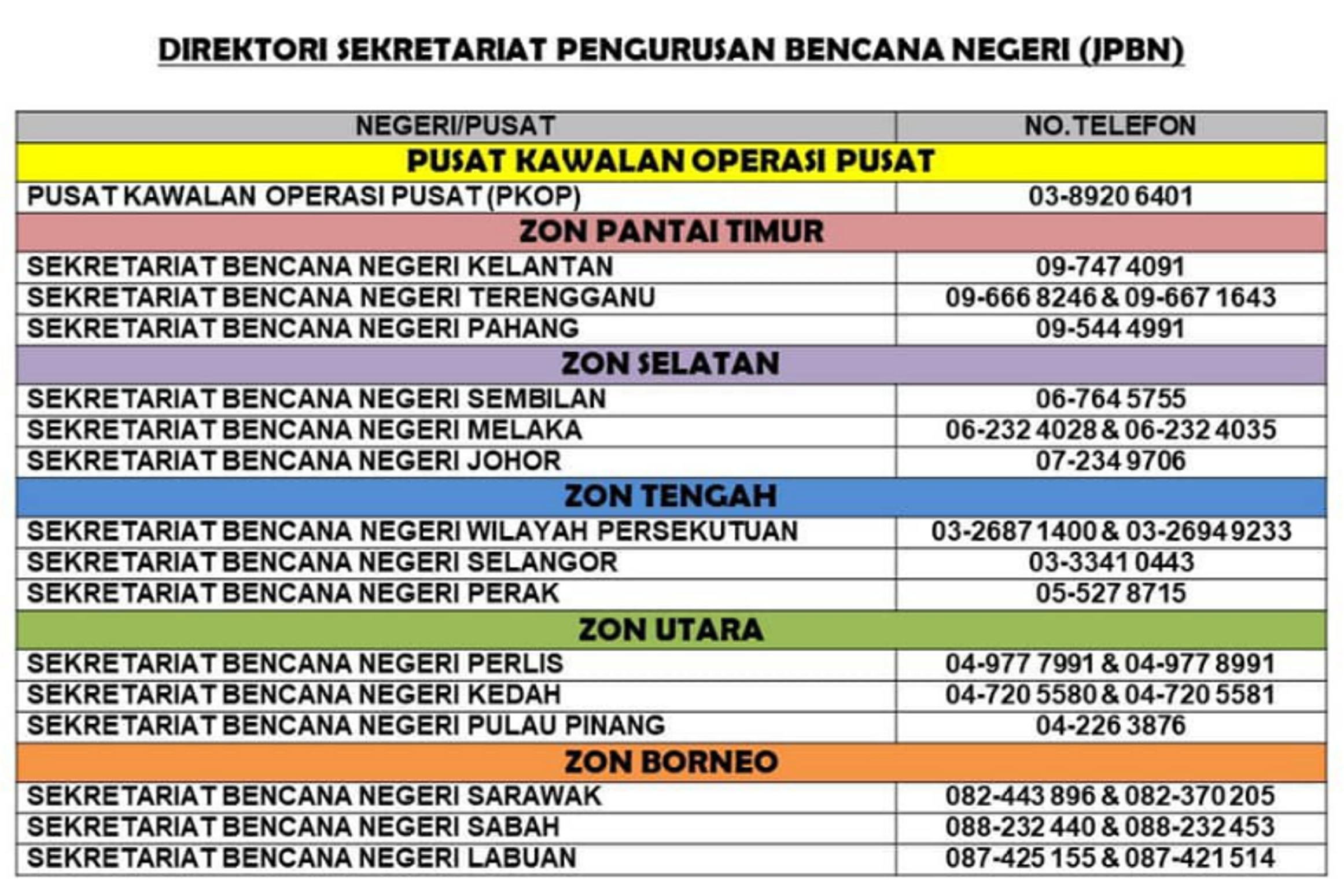
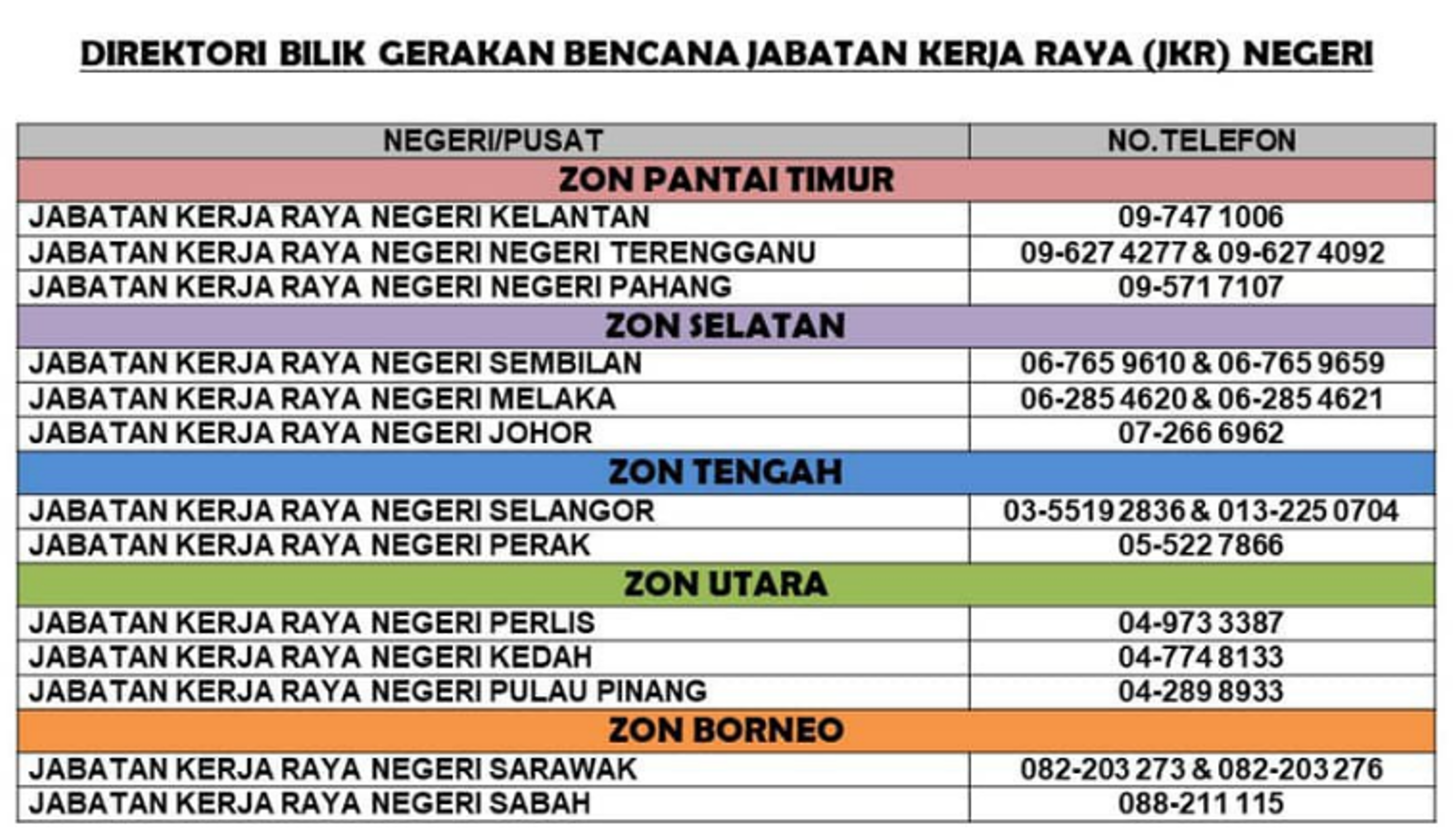
State Secretariat Directory for Disaster Management